Custom business apps, handled for you

Custom software built for the way your business works.

From the first screen to production hosting, security, integrations, and ongoing maintenance.

Prefer to talk it through first? Schedule a call.

  • Built around your process
  • Hosted and maintained for you
  • Secure, backed up, and updated
  • One person accountable from build to support
Before
  • Spreadsheets
  • Sticky notes
  • Paper notepads
  • Whiteboard lists
  • Email chains
  • Manual follow-ups
  • Double entry
  • Disconnected tools
After
  • One custom app
  • Searchable records
  • Nothing forgotten
  • One source of truth
  • Clear dashboards
  • Simple forms
  • Automated reminders
  • Reports you can trust
What I build

Practical software for the work you actually do

Not cookie-cutter templates with the labels changed — each app is built around your people, your data, and the steps that happen every day.

Internal tools

Internal business tools

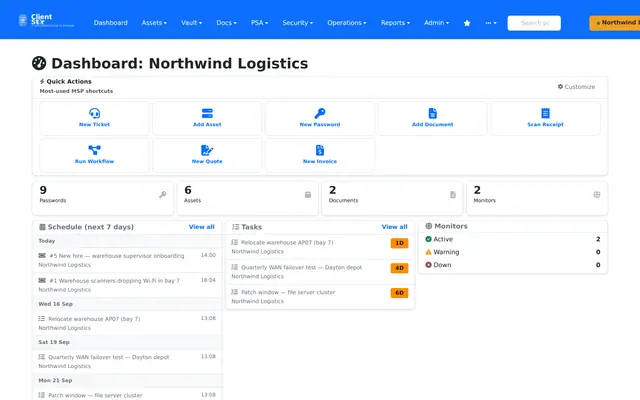
Replace spreadsheets and manual tracking with one simple system your team can use every day.

Example: ClientSt0r, gr0wpath

Portals

Customer and client portals

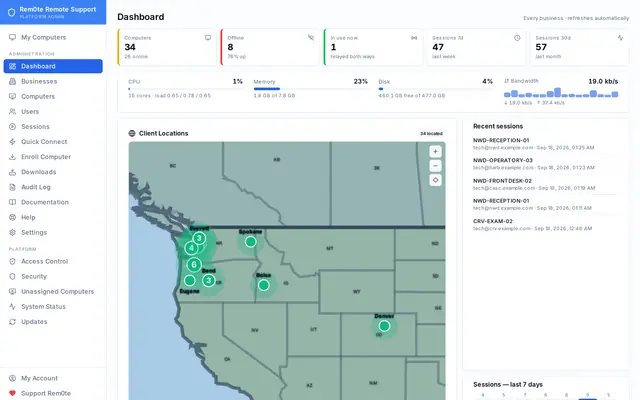
Let customers submit information, check status, upload files, or communicate securely.

Example: Practa, Rem0te

Sales

Lead and sales systems

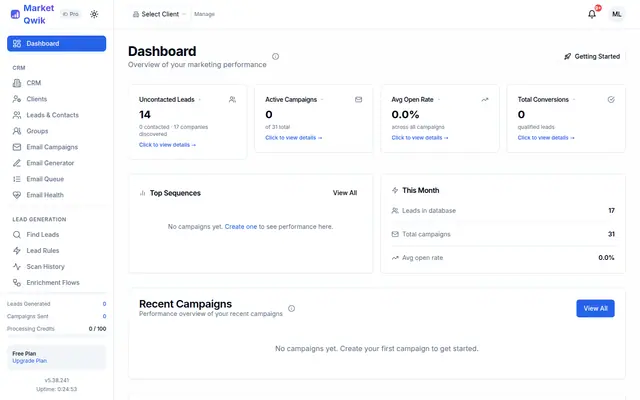
Track prospects, follow-ups, campaigns, contacts, and reporting in one place.

Example: MarketQwik

Workflow

Case, job, and workflow tracking

Keep every step, note, document, task, and deadline organized.

Example: Practa, Roots HQ

Reporting

Dashboards and reports

See the numbers that matter without chasing spreadsheets.

Example: Exploit Hound, Monit

Automation

Automation

Remove repetitive steps, reminders, imports, exports, and follow-ups.

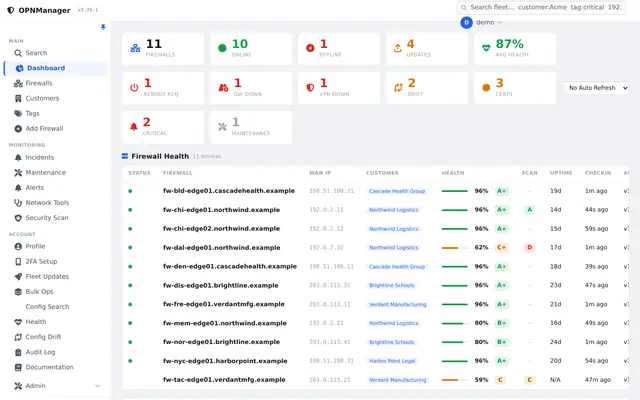
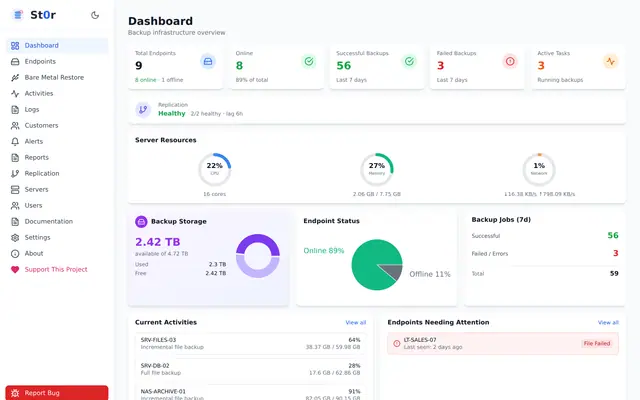
Example: OPNMGR, St0r

Featured work

Six platforms, six different problems

Business operations, email security, exposure management, workforce training, legal workflow, and sales automation — each one a complete system with its own data, users, rules, and infrastructure. Every project is labeled with its real status.

Business ApplicationsActive Beta

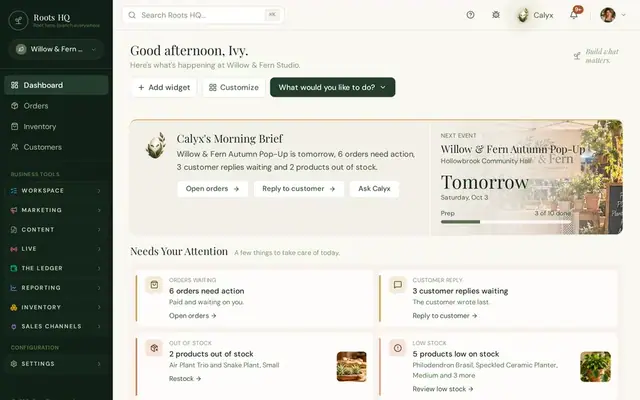
Roots HQ

Problem: Independent product businesses sell online, at markets, and in person — and end up running inventory, orders, and customers across a pile of tools that never agree.

A multi-tenant platform that keeps inventory, orders, customers, storefront, market events, sales channels, and reporting for an independent product business in one workspace — with an AI assistant that proposes and waits for approval.

  • One inventory and order queue across storefront, markets, and sales channels
  • Native storefront for each workspace, plus pickup, local delivery, and pay-by-link invoices
  • Market and event operations: pre-orders, prep checklists, event-aware POS
  • Calyx AI assistant: propose, review, apply — nothing changes without confirmation
  • Web administration plus Android apps (Roots Manager and Roots POS)
  • Multi-tenant
  • AI with human approval
  • Payments
  • Android
  • Integrations
CybersecurityActive Beta

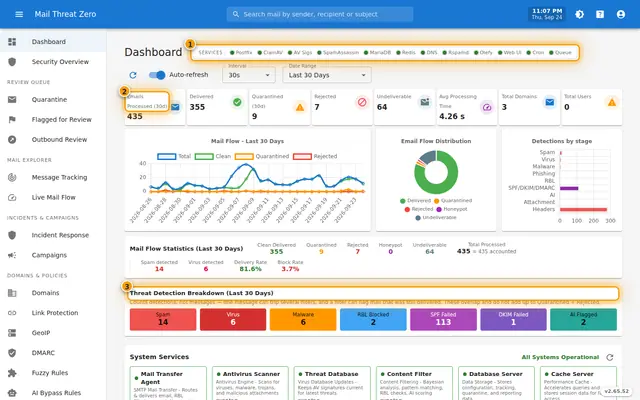
MailThreatZero

Problem: MSPs and multi-domain organizations pay per mailbox for filtering they can’t explain — when a message is blocked or delivered, nobody can show why.

A managed email security gateway for MSPs and multi-domain organizations, with explainable multi-stage scoring, per-tenant policies, quarantine, and domain reputation monitoring — priced per protected domain rather than per mailbox.

  • SMTP gateway with five scanning stages: reputation, authentication, malware, content, optional AI
  • Explainable scoring: each stage’s weight and contribution to the verdict
  • Monitor Mode, quarantine review and release, and message tracking
  • Delegated MSP administration with tenant, domain, and read-only roles
  • Domain reputation, DMARC aggregate reporting, and a REST API
  • Multi-tenant
  • Mail pipeline
  • Explainable scoring
  • Optional AI
  • REST API
CybersecurityActive Beta

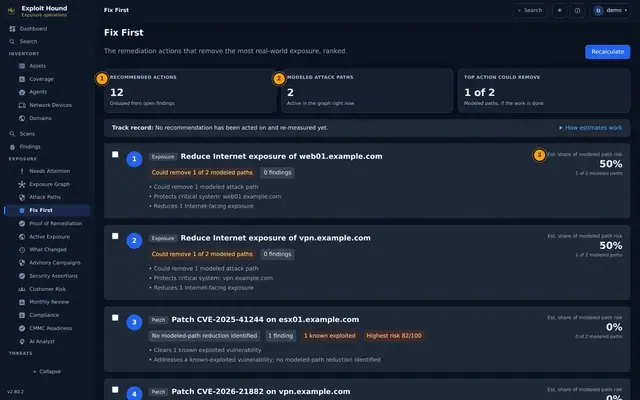
Exploit Hound

Problem: MSPs end up with thousands of vulnerability findings across customers and no useful answer to the only question that matters: what should we fix first?

A hosted exposure-management platform that discovers assets, correlates vulnerabilities, ranks remediation by the attack paths it removes, and verifies fixes by re-checking — across every customer environment.

  • “Fix First” — findings grouped into technician actions, ranked by attack paths removed
  • Asset discovery: external surface, onsite LAN probe, and endpoint agents
  • Remediation verified by re-checking, not by trusting a tool’s “success”
  • Threat Radar: known-exploited and most-likely-exploited vulnerabilities
  • Multi-tenant MSP console with per-customer exposure graphs
  • Multi-tenant
  • Risk modeling
  • Collectors & agents
  • Threat intel
  • Optional AI
TrainingProduction

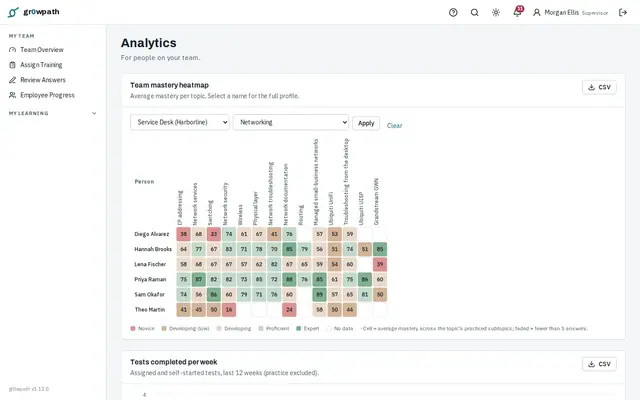
gr0wpath

Problem: Training platforms track course completion, not capability — managers can’t see what their people can actually do, or where one absence would leave a gap.

A workforce skills platform that measures what people already know, finds the gaps that matter for their role, and builds training, exams, and practical scenarios around each person — with manager reporting on real capability.

  • Skills checks and section-scored exams generated from an approved question plan
  • Role-based learning paths, including product-specific IT roles
  • Practical scenarios with supervisor review
  • Team mastery heatmaps and single-point-of-knowledge reporting
  • AI-drafted lessons and questions, each approved by a person
  • Assessment engine
  • Role-based access
  • AI with human review
  • SSO
  • Reporting
Legal / WorkflowEarly Access

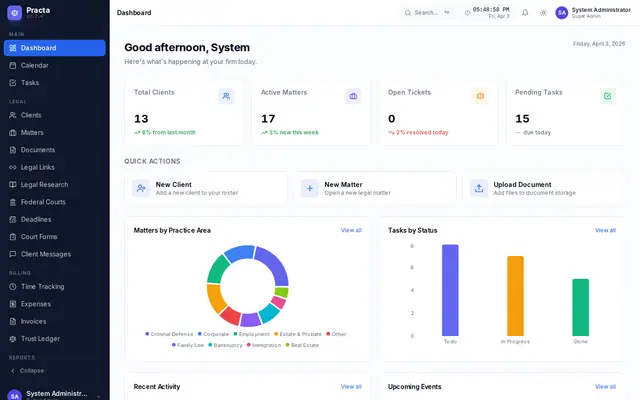
Practa

Problem: Law firms juggle separate tools for cases, documents, client communication, and trust accounting — and every handoff between them is a chance for something to slip.

Legal practice management that brings matters, documents, billing, IOLTA trust accounting, client communication, and AI-assisted drafting into one multi-tenant platform for a law firm.

  • Matter lifecycle tracking with statute-of-limitations alerts, calendar, and tasks
  • Document center: in-browser editor, templates, version history, and e-signing
  • Time, expenses, invoices, and an IOLTA trust ledger with three-way reconciliation
  • Branded client portal with TOTP two-factor sign-in and secure messaging
  • AI drafting, summaries, and vision OCR using the firm’s own API keys
  • Multi-tenant
  • Trust accounting
  • Bring-your-own AI
  • Audit log
  • Integrations
CRM / MarketingLive · Early Access

MarketQwik

Problem: Outbound marketing usually means paying for separate prospecting, enrichment, email, and CRM tools — and stitching their data together by hand.

A lead discovery, enrichment, CRM, and campaign platform for marketing teams and agencies — find prospects, enrich and verify contacts, run email campaigns, and report on results, with isolated workspaces per client.

  • Geographic and category-based prospect discovery
  • Enrichment flows and email verification with de-duplication
  • AI email generator with deliverability grading
  • Drip campaigns, CRM deals and tasks, and email conversation sync
  • Agency workspaces with client portals and white-label reports
  • Multi-client workspaces
  • Data enrichment
  • AI
  • Email automation
  • Integrations
View the Complete Portfolio Every project, searchable by category — including websites, hosted services, and work in progress.
Open source

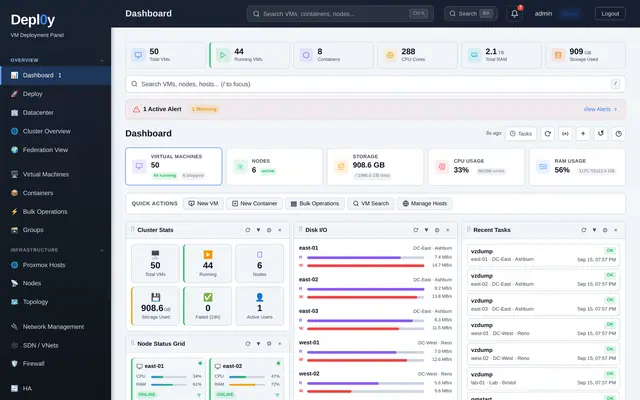
MSPZero: free, self-hosted MSP tools

MSPZero is the umbrella for five open-source tools for IT teams and managed service providers — documentation and service desk, firewall fleets, remote support, Proxmox infrastructure, and backups.

These are not commercial SaaS products. The source is public on GitHub under the MIT license, and each tool runs on your own server.

Engineering capabilities

More than an app developer. The complete system behind it.

Building the screens is only part of the job. A business application also needs dependable databases, permissions, integrations, secure hosting, backups, monitoring, maintenance, and a clear path for future changes.

My experience spans software development and the infrastructure that keeps business systems running.

  • Custom web application development

    Complete applications built around a real workflow — screens, data, business rules, and the operations behind them.

    Seen in: Roots HQ, gr0wpath, Practa

  • Database architecture

    Relational schemas designed for real records, history, and reporting — from Prisma models to an 80-table MySQL design.

    Seen in: ClientSt0r, OPNMGR, Rem0te

  • SaaS and multi-tenant systems

    Tenant isolation enforced in the data layer, not just hidden in the interface.

    Seen in: Roots HQ, MailThreatZero, Exploit Hound, Rem0te

  • API development and integration

    REST APIs with OpenAPI schemas, and integrations with payment, PSA, RMM, Microsoft, Google, and infrastructure APIs.

    Seen in: ClientSt0r, MailThreatZero, Depl0y

  • Workflow automation

    Scheduled jobs, staged rollouts, replication, enrichment flows, and campaigns that run without someone babysitting them.

    Seen in: OPNMGR, St0r, MarketQwik

  • AI-assisted business applications

    AI that drafts and suggests — with a person approving anything that matters.

    Seen in: Roots HQ, gr0wpath, MailThreatZero, OnBetterTerms

  • Identity and access management

    Roles and permissions, TOTP and passkeys, Entra ID and LDAP single sign-on, and audited access.

    Seen in: ClientSt0r, Rem0te, gr0wpath

  • Dashboards and reporting

    Dashboards that answer real questions — what to fix first, who can do what, what’s healthy.

    Seen in: Exploit Hound, gr0wpath, Monit

  • Linux server hosting

    Production hosting for web apps, mail, databases, and DNS on infrastructure I operate.

    Seen in: MSP Reboot Hosting, Monit, MailThreatZero

  • Virtualization and infrastructure

    Proxmox clusters, server hardware management, and per-customer virtual machines.

    Seen in: Depl0y, Monit

  • Security and operational monitoring

    Email security, exposure management, firewall fleets, and infrastructure monitoring.

    Seen in: MailThreatZero, Exploit Hound, OPNMGR, Monit

  • Backup, recovery, and maintenance

    Backups you can see, configurations you can roll back, and systems kept patched after launch.

    Seen in: St0r, OPNMGR, ClientSt0r

Sound familiar?

Is this what running your business feels like?

Most growing businesses outgrow their tools long before they replace them. If any of these sound like your week, you are not alone — and it can be fixed.

  • You are tracking work in spreadsheets that keep breaking.
  • Important details are buried in email.
  • Your team enters the same data in multiple places.
  • You pay for several tools that still do not fit.
  • Reporting takes too long or depends on one person.
  • Customers, jobs, cases, leads, or tasks fall through the cracks.

A custom app gives your business one place to run the process — built around how you already work.

Why custom?

Why custom instead of another subscription?

Generic software almost fits. A custom app fits — because it is built around the way you already work.

Generic software

  • Almost fits
  • Charges per user
  • Forces your workflow to change
  • Has features you do not need
  • Makes reporting and exporting difficult
  • Support does not know your business

Your custom app

  • Built around your actual process
  • No per-user tax unless we choose that model
  • You own your app and your data
  • Add only what you need
  • Reports match your business
  • Built and supported by the person who knows it
How it works

A simple path from idea to working app

You are involved at every step, and nothing ships that you have not seen working. Planning, building, hosting, security, backups, monitoring, and improvements are one engagement with one accountable person — not a build that gets handed off and forgotten.

  1. Discovery

    A conversation, not a contract. You explain what you are trying to fix, and I learn how the work actually happens today — the people, the steps, the data, and the tools involved.

  2. Scoping

    I map that workflow into the screens, users, data, reports, and integrations the app needs, plus how it will be hosted and supported.

  3. Proposal

    You get a written scope and pricing proposal before any paid development starts. Larger projects are split into phases, and ongoing hosting and maintenance are identified separately.

  4. Development

    I build a working first version — not just a mockup — your team tries it on real work, and we adjust from real use before anything goes live.

  5. Launch & hosting

    I can host it for you with security, backups, and monitoring in place. Or you own it outright and take it — with a full handoff package — to run yourself or with another developer.

  6. Maintenance

    If I host and maintain it, the app stays patched, backed up, monitored, and supported, and keeps changing as your business does. You talk to the person who built it.

Wondering about cost? How pricing works · Ownership, handoff, and hosting questions

Why choose me

You are not hiring a disappearing dev shop

You are working with someone who has built software, owned a managed IT company, supported real businesses, and kept their systems running, secure, and backed up for years.

A custom application is not just screens and buttons. It is workflow, data, security, uptime, backups, support, and long-term maintenance. I have done all of those parts for real businesses — not as demos, but as the work that kept clients running.

So when your app goes live, the person who built it already understands how it has to run, what can go wrong, and how to fix it. Nothing is outsourced, and there is one person accountable from the first conversation to long-term support.

“Custom software is better when the person building it understands the whole picture — the users, the workflow, the servers, the security, the backups, and the business pressure behind the request.”

  • Programming since the 1980sHands-on experience going back to machine language — decades of technical depth, not just recent web work.
  • Owned an MSP from 1999 to 2023Ran a managed IT company for real clients: support, servers, networks, security, email, and backups.
  • Real-world operations experienceSecurity, infrastructure, hosting, backups, and support — handled through actual client emergencies, not theory.
  • Builds it and runs itI understand how the app has to work after launch, because I am the one who keeps it running.
  • Deadlines kept and metWhen we agree on a timeline, I hold to it. You get realistic dates up front and working software delivered when promised.
  • Full pricing disclosure — no gotchasYou get a clear written quote before any work starts. No hidden fees, no surprise line items, and no charging you later for access to your own software.
  • Never outsourcedYour app is not farmed out to a rotating cast of contractors or an offshore team.
  • One accountable personThe person who wrote the code is the person who answers when you need help.
Security, hosting & backups

Built to keep working after it goes live

An app is not finished when it demos well. It is finished when it stays online, stays secure, and can be recovered if something goes wrong. That part is built in from the start.

  • Hosted in Surety Data Centers, a carrier-neutral colocation facility.
  • Encrypted public access with HTTPS.
  • Admin areas can be locked down and protected.
  • User permissions can be limited by role.
  • Backups for files, databases, and server recovery.
  • Updates and security patches handled as part of maintenance.
  • Monitoring for uptime, storage, health, and SSL expiration.
  • Optional two-factor authentication.
Technical details — for technical reviewers

For anyone who wants the specifics under the plain-English summary above:

  • Public HTTPS/TLS terminated in front by Nginx Proxy Manager (NPM), with the application kept simple and locked down on a private network.
  • Brute-force and abuse protection with fail2ban, rate limiting, and GeoIP filtering to shrink the attack surface.
  • Firewall rules, least-privilege access, hardened server configuration, and clear separation between public and private services.
  • Application code, dependencies, and the underlying platform are reviewed against known CVEs and common exploit classes, with EPSS-driven prioritization.
  • Role-based access control (RBAC), optional two-factor authentication, strong session handling, and protected admin areas.
  • Backups for application files and databases, replicated to additional backup servers and validated as part of maintenance.
  • Ongoing dependency review, OS/runtime patching, and uptime/health/storage/SSL monitoring.

Compliance: who is responsible for what

Applications are hosted on professionally managed infrastructure with security controls selected for each deployment. Datacenter-level certifications or assurance reports, where applicable, belong to the underlying facility or service provider and do not automatically certify an application. Security, access controls, retention, backups and compliance requirements are evaluated for each project.

The facility: Surety Data Centers
Any certifications or audit reports belong to the facility operator that holds them, not to MyAppDone or to an application. Surety’s public website does not list certifications such as SOC reports or ISO 27001, so none are claimed here. MyAppDone does not hold these certifications itself.
Inherited from the facility
Physical security, power, cooling, and network connectivity come from Surety. It publishes its facility specifications — including redundant power and cooling, biometric physical security, and on-site staff around the clock — at suretydc.com.
Implemented by MyAppDone
The application and server safeguards listed above: HTTPS, hardened servers and firewalls, abuse protection, role-based access and two-factor sign-in, backups, patching, and monitoring.
Your application’s own requirements
Rules such as HIPAA or PCI DSS depend on what data the app handles and on your policies. They are not satisfied automatically by where an app is hosted; they are scoped and documented for each project that needs them.
FAQ

Common questions

Straight answers about how projects start, what they cost, ownership, hosting, and security.

How do we start?

We start with a conversation — not a contract. Tell me what you are trying to fix, and I will learn how your business actually works. From there I map the workflow, build a first version you can try, and we adjust from real use before anything goes live.

How does pricing work?

Custom software is quoted around the scope of the work, not a generic monthly package. We begin by discussing your workflow, required features, integrations, hosting and support needs. You receive a written scope and pricing proposal before paid development starts. Ongoing hosting and maintenance are identified separately where applicable.

Larger projects are usually broken into phases, so you see working software early instead of paying for everything at once.

Do I own my app and data?

Yes. We can structure it so you own the application outright and can take it — and your data — with you anytime. No per-user taxes, no feature lockouts, and no losing access to what is yours. Or you can keep it hosted with me, where backups, security, and uptime are handled for you. The choice is yours, and it is yours to change later.

What if I want someone else to continue development, or do it myself?

You are never locked in. When your app is built, I provide a complete development handoff package — including code planning, database schema and diagrams, architecture notes, setup and deployment instructions, full documentation, and guidance — so you can either have me build and maintain the application, or take the plan and continue development internally or with another developer.

Can you host and maintain it?

Yes. I can run your app in a secure hosted environment so you never have to manage servers. Hosting includes security, backups, monitoring, updates, and patches as part of ongoing maintenance — the part most "we built it and left" projects skip.

Can it replace spreadsheets?

That is one of the most common reasons people reach out. A custom app gives your team one place to enter and find information, with the structure, permissions, and reporting that spreadsheets cannot reliably provide once more than a couple of people are involved.

Can it connect to software I already use?

Usually, yes. Many tools offer a way to connect, and your app can share data with the software you already rely on — email, billing, calendars, reporting, and more — so information does not have to be entered twice.

Is it secure?

Security is built in from the first design decisions, not added at the end. Your app runs over HTTPS, admin areas are locked down, access is limited by role, and the system is monitored, patched, and backed up. There is a "Technical details" section above for anyone who wants the specifics.

Do you use AI?

Yes — as a helper, not the author. AI speeds up repetitive work like boilerplate and documentation. The decisions that matter — how the app works, how it is laid out, and how it is secured — are made by a human who understands the whole environment around it.

What happens after launch?

Launch is the beginning, not the end. I keep the app patched, backed up, monitored, and supported, and the app can keep changing as your business changes. When something needs fixing or improving, you talk to the person who built it.

Have something you need built?

Your business has its own workflows. Your software should fit them.

Let's build it

Have a process that needs to be easier?

Tell me what you are trying to fix. Whether it starts as a spreadsheet, a messy workflow, or an idea in your head, I can help turn it into a working app.

Schedule a Call

Prefer to talk it through? Book a free consultation · Prefer email? agit8or@agit8or.net

What kind of app are you thinking about? (pick any that fit)

Verification runs privately in your browser — no tracking, no third-party captcha.